
Mental Health Matters: Is AI making us spectators of own lives?
I write this today while admitting I do not have a handy list of solutions or strategies to suggest (just a spoiler alert before you get to the end and are expecting an answer to this issue). I simply offer this as food for thought, something for us to ponder. Even if it makes us uncomfortable.
My daughter is an eighth-grade math teacher with 12 years of experience. Bless her soul, I am not sure how she does it, but she loves middle schoolers! Her observations of her students are telling. They are at the point where they required to “show their work,” which irks many of them greatly. Higher learning requires more in-depth thinking, more reasoning. Her students are much more interested in learning very specific things rather than general patterns found across different fields. It seems it is far easier to memorize 12 different formulas, rather than understand where those formulas come from. Sadly, for them, it is often the understanding of the concepts that eliminates the need to memorize the details. They cannot generalize the learning from one application to another.
What I have just described can be understood as developmentally typical of middle schoolers given the stage of brain development during this stage of childhood. However, I hear the same things from high school teachers. I have spent the better part of my adult life working in higher education, teaching and mentoring college students. I notice these same tendencies among my own students at the undergraduate and graduate levels.
Many of my students use AI (artificial intelligence) for assignments, including presentations. I find it sadly curious when they include words and phrases they simply do not have in their own vocabulary, such as “whilst,” or “here-to-for,” thinking I won’t know. Simply having copied and pasted words, phrases, sentences and whole paragraphs, the day of the actual presentation is often the first time they have read and spoken those words themselves. They cannot pronounce the vocabulary in their own presentations. They stumble. They cannot answer questions about their content, largely because it is not their own content. It is NOT a product of their own thinking and discovery.
These trends seem to have converged with another factor in western culture. We tend to want to save our children from discomfort. The intersection of this with the rise of AI seems to result in children who have no tolerance for the process of learning, which usually leads to some form of not knowing, of facing the task of critical thinking. This can become uncomfortable.
I’ve written about this in earlier articles, but mental health has become a concern of major proportions on college and university campuses today. It becomes evident in almost all aspects of collegiate life. Students struggle with being able to function in a classroom, being able to study or participating in the life of their own education. They have little if any mental maps for their own understanding of their learning. Many have accommodations which often include, if not wholly center around, their mental health. They often need extra time to finish assignments due to debilitating depression. Others need to be excused from the classroom because certain topics and discussions cause them a great deal of anxiety. Across the board, students carry a lot of worry and anxiety about getting good grades and the quality of their grade point averages. Rarely, in my experience, are they worried about learning.
The American Psychological Association reports that in the year 2021-22, as many as 60% of college students meet the criteria for at least one mental health condition. One survey found that almost 75% reported moderate to severe psychological distress during their time as college students. Campuses around the country have had to rethink their delivery of counseling services, with students having to wait days and sometimes weeks to get an appointment for a mental health crisis. Mental health crises rarely offer the luxury of waiting several weeks to be addressed.
This shows up in research on these same students’ performances after graduation. Employers are reporting from the field that in their recent hires of newly minted college students, they are finding this group to be struggling with preparation for the workplace. Specifically, they are not prepared to receive critical feedback, to communicate effectively or to take initiative on projects without a high degree of handholding.
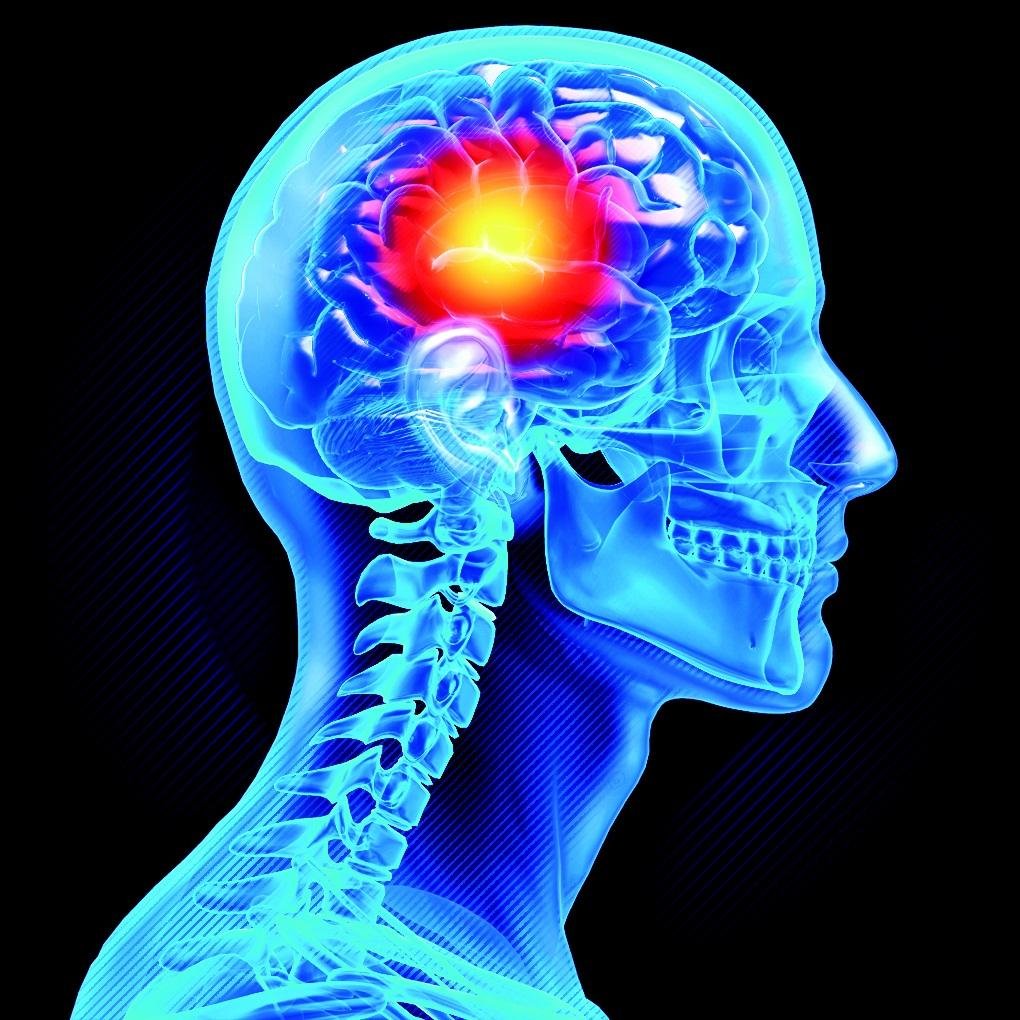
While these issues surely existed before the widespread use of AI, it does bring up questions about how the use of AI changes the landscape of thinking and learning for a population who is already hesitant to dive into the messier parts of mental inquiry. The research refers to this as “cognitive offloading.” AI offers a quick exit to avoiding the hard work of understanding things at a deeper and more meaningful level. Research extending back to the early 2000s indicate that there was early evidence of this as a potential risk. A recent MIT Lab study indicates that when we excessively use AI driven answers, there is the risk of what is called cognitive atrophy, or the shrinking of critical thinking abilities. This, of course, depends on if we use it as a crutch or as a tool for growth. Which brings us to this question: are we teaching people to use AI as a crutch or a tool for growth? It is surely here to stay, so this is a conversation well worth having.
As someone who has spent the vast majority of my life without AI, this reminds me of my own early experiences learning to navigate as I became a driver. Once I had driven somewhere by myself, it became much easier to give directions than had I simply been a passenger. I wonder how much of that is true for drivers today who depend on navigation systems? And as a parallel, how much have today’s students learned while using AI do the heavy lifting? Is this the catalyst for what teachers are seeing in middle school, high school, college and beyond?
I’ve come to think that what is behind much of this is described in the African proverb, “The child who is carried does not know how far the journey is.” Anyone who can tap a key can find the answers to any question in the time it takes you to get up out of your chair. We are “carried” to the answers to any question that comes to mind, with no attention to the mechanics and action of learning. AI is a perfect vehicle to getting answers without the work of understanding. You don’t have to be in the driver’s seat, so we have no idea where we are, or even how we have gotten there. The effort has been removed; the work has been taken out of understanding. When that happens, we no longer understand.
Learning by its very nature involves unknowns and variables that we must understand and account for in every situation. AI tends to remove this step. How can we prepare ourselves to tolerate the process of not knowing, the living with mystery and the work of discovery? Most of life involves high levels of uncertainty, not knowing, mystery and discovery. It rarely involves a recipe card with step-by-step instructions and multiple-choice questions.
When designing a lesson, educators think about how to scaffold the learning experience. We start with comprehension of simpler, less complex ideas, on which we than can start to build and structure future learning. When we lean on a tool such as AI to find answers, the construction of learning is circumvented. When we don’t have the earlier learnings and foundations, the scaffolding has nothing to support it. Students have been carried down the path, and they don’t know about the path itself. One must wonder if this what we are seeing in our young folks’ struggles with mental health and their lack of confidence.
When we figure out a math concept or use our own words to describe something, we are no longer simply passengers of our own learning. We are in the driver’s seat. We are creating an understanding, which over time builds resilience. We begin to understand that through hard work and perseverance, we can figure things out, which leads to increased confidence in our own ability to learn and understand. The struggle itself, the act of finding your way through the unknown, which is what students are using AI to avoid, is precisely what ends up making this process so empowering.
Have questions you’d like to ask Shirley? Message her at oasistherapyservices@gmail.com.


Comments
No comments on this item Please log in to comment by clicking here